


Build Your Emotional Fitness
Parenting a neurodivergent child can ask a lot of us emotionally.
Worry. Frustration. Guilt. Overwhelm. Grief. Joy. Pride. Hope.
Sometimes all before breakfast.
We can't eliminate the hard emotions—or control everything happening around us. But we can build skills that help us navigate those emotions without letting them completely take over.
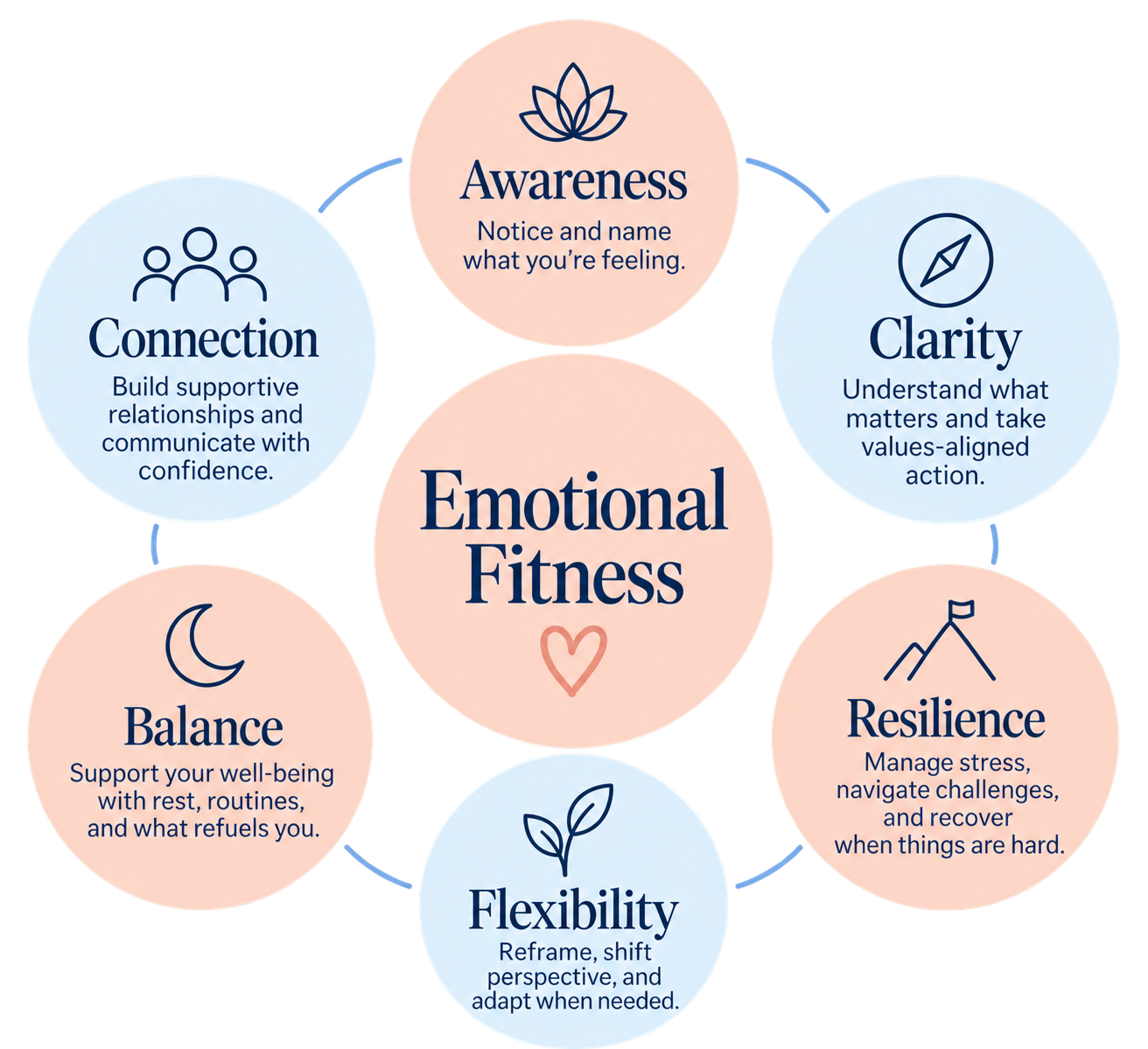
I think of this as emotional fitness.
Just like physical fitness, emotional fitness isn't about never struggling. It's about strengthening the skills that help us respond to hard moments, recover when we get knocked off course, and stay connected to what matters most.
Your Emotional Fitness Toolkit
There are lots of ways to strengthen our emotional fitness. I’ve organized these resources into three areas: how we work with our thoughts, feelings, and actions.
Start wherever feels most useful right now. You don’t have to work on everything at once.
Thought Work
Learn to notice and respond differently to thinking patterns that aren’t serving you.
Feelings Work
Build emotional awareness and practice skills for navigating difficult emotions.
Action Work
Get clear on what matters and build habits, relationships, and actions that support the life you want.